
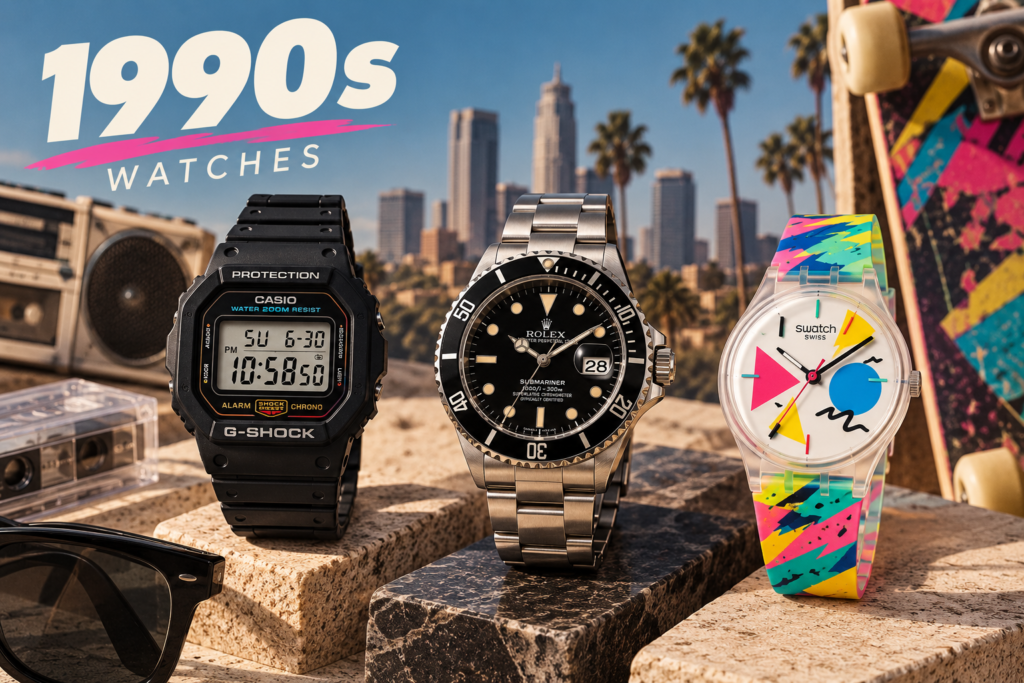
Nineties watch design is harder to summarize than the 1980s. The bright plastic did not disappear, but it shared the decade with brushed steel sports watches, integrated bracelets, increasingly serious quartz chronographs and a quiet return of mechanical enthusiasm. A single shop window could hold a Timex Ironman, a TAG Heuer S/el and a newly revived Swiss mechanical chronograph without any of them feeling out of place.
Omega Seamaster Diver 300M: the polished sports watch
Omega introduced the Seamaster Diver 300M in 1993. The wave dial, skeletonized hands and helium-release valve gave it a look that was technical without being austere. Its appearance in GoldenEye in 1995 tied the model to James Bond and helped make it one of the decade’s most recognizable luxury sports watches.
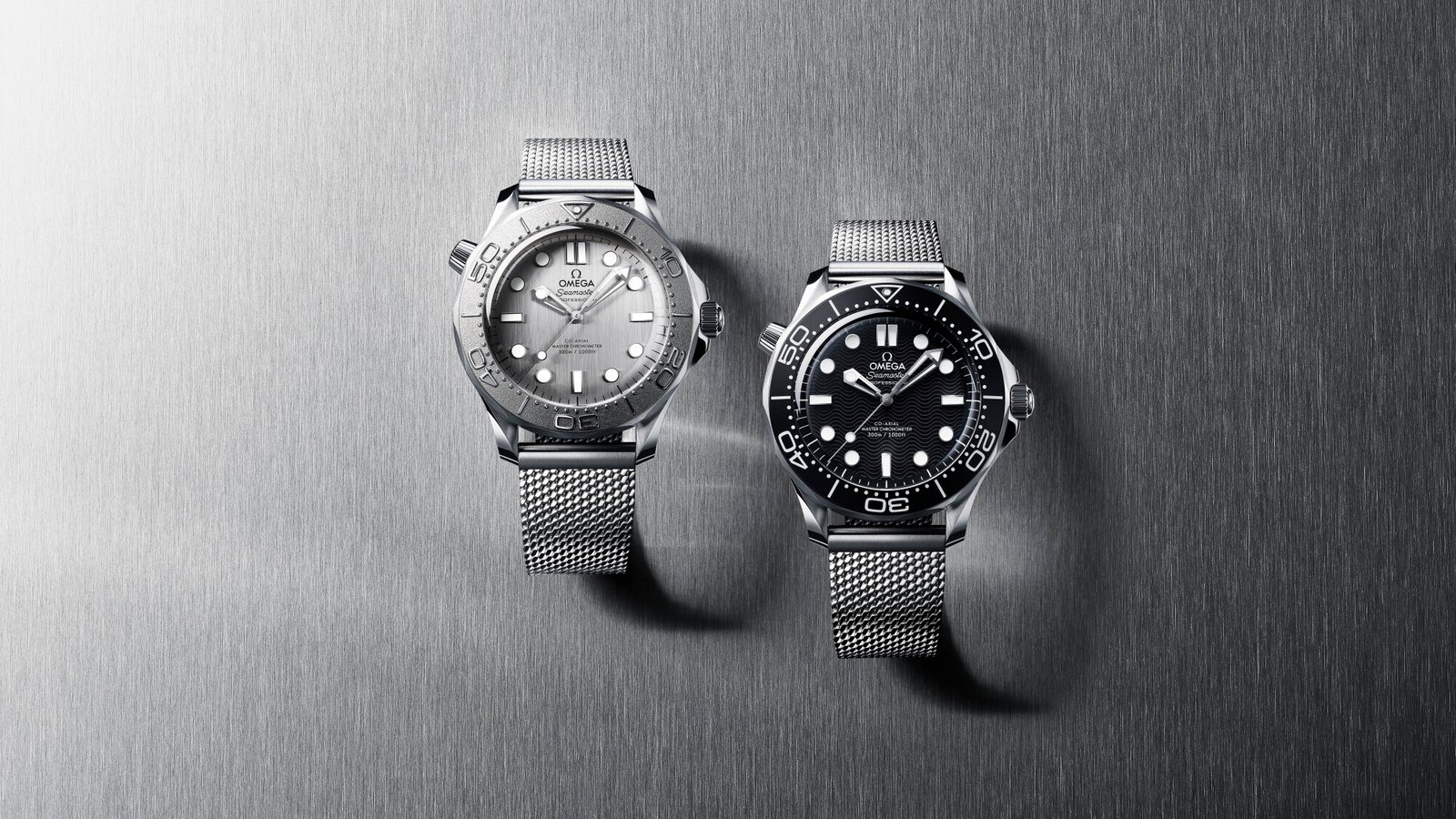
Reference: OMEGA’s Seamaster Diver 300M history.
TAG Heuer S/el: a bracelet you can spot across a room
The S/el arrived in 1987 and became a signature 1990s TAG Heuer. Its interlocking S-shaped bracelet was the design, not a supporting detail. The range expanded from quartz three-hand watches into chronographs, analog-digital models and automatics. Ayrton Senna wore S/el chronographs, strengthening the link between the collection and Formula One.

Reference: TAG Heuer S/el vintage guide.
Seiko SKX007 and the democratization of the dive watch
The SKX007 appeared in the mid-1990s and became a default recommendation for an affordable automatic diver. It had a distinctive cushion-shaped case, day-date display and a design that tolerated different straps remarkably well. Discontinuation changed its value proposition: what was once an inexpensive working watch is now often sold with a nostalgia premium. Judge it against current Seiko 5 Sports and Prospex options rather than buying on reputation alone.
Timex Ironman, Indiglo and watches built for use
Timex introduced Indiglo electroluminescent illumination in the early 1990s, and the even glow became a genuine everyday advantage. Ironman watches were light, readable and easy to operate with wet or tired hands. They are a good reminder that a decade’s most influential watches are not always the ones auction houses discuss.
G-Shock and Baby-G move into youth culture
G-Shock’s toughest years began earlier, but the 1990s turned the range into a global style language. The DW-6900 arrived in 1995 with its familiar three-eye display. Baby-G, introduced in 1994, translated shock resistance into smaller cases and bolder colors. Both lines became natural partners for music, skate and streetwear culture.
Buying a 1990s watch now
- Quartz: battery leakage is the enemy. Ask when the battery was last changed and whether every digital segment works.
- Automatic divers: check bezel action, crown threads and service history. Never trust old water-resistance markings without a fresh pressure test.
- Integrated bracelets: missing links can be difficult to source, especially for discontinued TAG Heuer references.
- Plastic and resin: fading can look charming; cracking around spring-bar holes is structural.
- Luxury sports watches: request reference, serial and movement photos, then verify them independently.
Where to begin
The best 1990s watches do not feel like props. They feel practical first, with just enough visual confidence to tell you exactly when they were designed.