
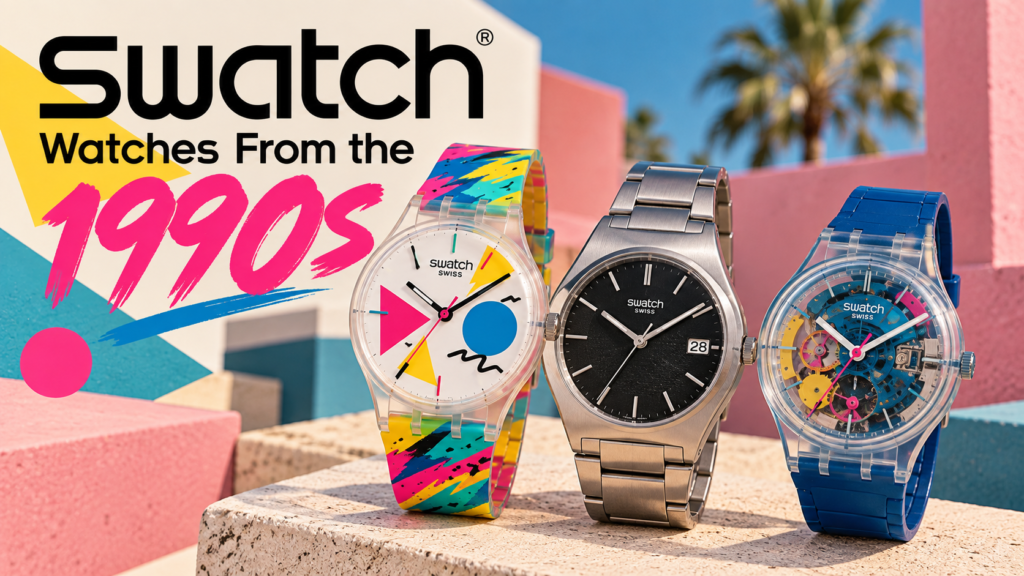
Swatch entered the 1990s having already saved the Swiss watch industry. The plastic watch launched in 1983 proved that cheap and desirable could coexist. By 1989, the Swatch Group had become the world’s largest watchmaker. The 90s question was different: what next?
The answer turned out to be almost everything. Platinum cases. Automatics. Ultra-thin movements. Artist editions. Metal bracelets. The familiar plastic Originals never disappeared, but they stopped being the whole story.
For anyone looking at 90s Swatch watches today, that range is what makes the decade interesting. There’s no single defining model, just several directions the brand took at once. Here’s what actually matters.
The Models Worth Knowing
Art Specials (1990-1999) Swatch worked with artists throughout the decade. Alessandro Mendini designed COSMESIS and METROSCAPE in 1990, then returned with MONUMENTO MENDINI in 1998. Alfred Hofkunst made three trompe-l’oeil watches in 1991 that were sold next to fruit and vegetables at Swiss markets. Sam Francis got his Art Special in 1992. Nam June Paik’s ZAPPING followed in 1996.
None of these are technically special. Quartz movements, plastic cases. What makes them collectible is the design and the artist connection. Mendini came from postmodern architecture and treated the watch as a small canvas. Paik was a video art pioneer, and ZAPPING reflects the chaotic electronic imagery of the mid-90s.
Swatch Automatic (1991) The first mechanical Swatch. It used an ETA 2840, a simplified ETA 2824-2 with reduced beat rate and cheaper shock protection. The movement was visible through the front and back. For collectors who prefer mechanical watches but want something from Swatch’s history, this is the obvious starting point.
Tresor Magique (1993) A platinum Swatch sounds like a contradiction, and it was. Released for the brand’s tenth anniversary, it had a platinum case, blue enamel dial, and automatic ETA 2840-P. Only 12,999 were made. One sold for $1,600 when new, according to a 1993 report. Complete examples with box and papers now sell for considerably more.
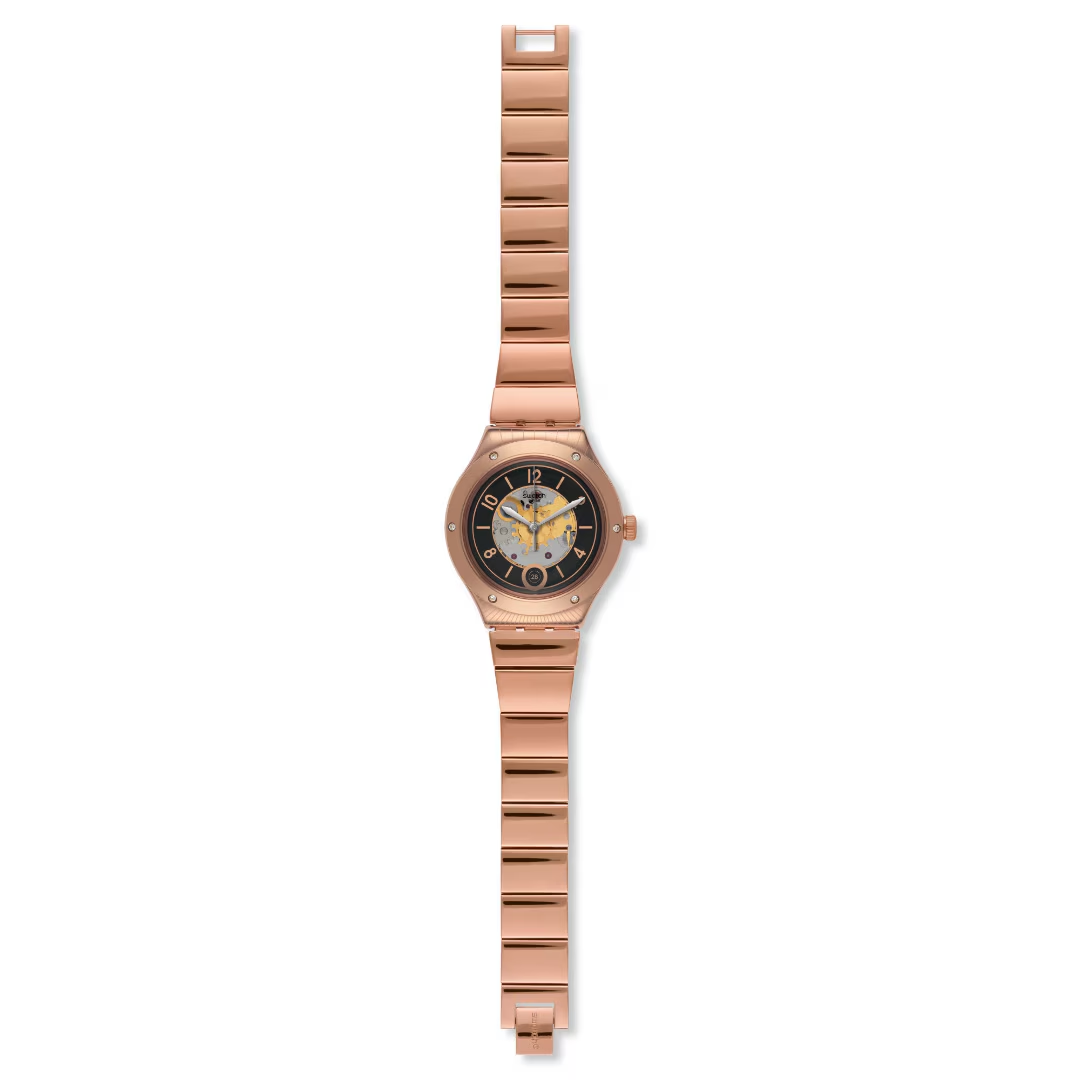
Swatch Irony (mid-90s) Stainless steel and aluminum cases brought the Swatch idea into metal. The watches have more weight and presence than the plastic Originals, closer to a conventional watch without fully adopting conventional design. Less fragile than plastic, and a better choice if you actually plan to wear the thing.
Swatch Skin and Jelly Skin (1997-1998) The Skin line was the thinnest watch Swatch had made, at 3.9 mm thick and 34 mm across. It wears more like a bracelet than a watch. Jelly Skin added a transparent case the following year, and MoMA eventually added it to its design collection.
Swatch Scuba (1993) The Bay Breeze and related Scuba models combined dive-watch styling with fluorescent colorways that could only have come from the 90s. Pink and green. Blue and pink. Red and green. The Scuba is one of the more recognizable Swatch silhouettes from the period, and clean examples now trade for around $150.
What to Check Before Buying
Strap condition. Original plastic and resin straps harden and crack with age. A watch that looks fine in a photo can develop problems once the strap is bent. If originality matters, an intact strap adds interest. If you plan to wear it, don’t assume a 30-year-old plastic strap will tolerate daily use.
Transparent cases. Clear and translucent Swatches can yellow, cloud up, and show stress marks. Some aging is reasonable on a watch this old. The question is whether you are comfortable with it.
Battery damage. Old quartz watches that sat with dead batteries can develop corrosion. Ask whether the battery compartment is clean and the watch has been tested. A cheap purchase stops being cheap if corrosion has damaged the movement.
Water resistance. A 90s Swatch might have been rated for swimming when new. That means nothing now unless the gaskets have been replaced. Treat it as splash-resistant at best.
Exact reference. “Vintage Swatch from the 90s” tells you almost nothing. Swatch produced hundreds of designs, and two watches from the same year can have very different collector interest. Look for the model name, reference, and production year.
What Collectors Talk About
Plastic straps come up constantly. Several owners mention cracking and discoloration as the most common problem, and original replacements are hard to find.
With the Irony line, the bracelets get attention. Steel bracelets from the 90s can stretch, and sourcing original replacements is difficult. The watches themselves hold up better than plastic models.
Art Specials attract a different kind of buyer. Collectors interested in these care more about the artist and the design than mechanical condition. Complete sets with original packaging and documentation are more desirable than loose watches.
Are 90s Swatches Valuable?
Some are. Many aren’t.
Common plastic models from the early 90s often sell for very little. A Swatch collector in 1992 told a reporter he had “a lot of cheap watches” and didn’t own any valuable pieces. That attitude was common then. It’s less common now.
Limited editions, Art Specials, unusual references, and complete sets can command higher prices. The Tresor Magique and certain Skin models are among the more valuable 90s Swatches. The POP Swatch PAROS from 1990, with its 46 mm case and fabric strap, sells for around $200 to $250 in good condition. The Swatch Beat SQZ103 from 1999, with its digital display and G-Shock-adjacent styling, trades for $250 loose and up to $400 with box and papers.
But most 90s Swatches remain affordable. That’s part of the appeal. You can build a collection based on what you actually like rather than what the market tells you to like.
FAQ
Are 90s Swatch watches worth anything? Some are. Common plastic models from the early 90s sell for very little. Limited editions, Art Specials, unusual references, and complete sets can command higher prices. The Tresor Magique and certain Skin models are among the more valuable ones.
Can you still wear a 90s Swatch every day? Yes, with caveats. Check the strap for cracks and brittleness first. Assume water resistance is compromised unless the watch was serviced. If the strap feels stiff or discolored, replacing it with a modern Swatch strap is practical even if it reduces originality.
How do I identify a 1990s Swatch? Start with the model name and reference number. Swatch’s own archive and third-party databases can confirm production years. Physical condition also gives clues, since 30-year-old plastic ages in recognizable ways. Be cautious of sellers who describe a watch vaguely as “vintage” without providing reference information.
What’s the most interesting 90s Swatch? There isn’t one answer. The Art Specials are particularly interesting for design history. Jelly Skin represents Swatch’s late-90s experimentation with ultra-thin transparent watches. The Scuba models capture the fluorescent aesthetic of the period. The best choice depends on whether you’re collecting art, design, or simply the watches you remember.